I spent most of my morning shivering in the North Sea, a ritual that feels less like “wellness optimization” and more like a stubborn negotiation with my own willpower. It’s a far cry from the polished, high-octane lifestyle coaching you see on Instagram, which suggests that you can simply “biohack” your way into a new identity overnight. The truth is much more tedious. Most people spend hundreds of dollars on planners and productivity apps, searching for a secret neurological trigger, when they should be looking at the mundane repetition of their Tuesday afternoons. If you want to understand how habits actually form, you have to stop looking for the spark and start looking at the slow, quiet accumulation of boring choices.
I’m not here to sell you a 30-day transformation or a magic morning routine that requires you to wake up at 4:00 AM. My promise is much simpler and, frankly, a bit more exhausting: I am going to walk you through the clinical reality of behavioral change. We are going to strip away the hype and focus on the unremarkable mechanics of consistency. I’ll show you which repetitive, unglamorous actions actually stick and which ones are just expensive distractions.
Understanding How Habits Actually Form
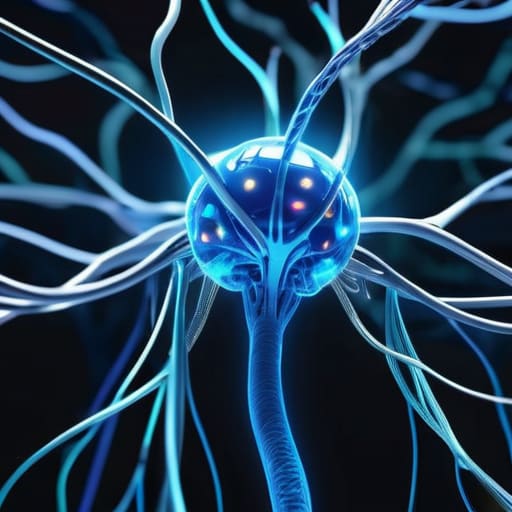
If you strip away the marketing fluff, you’re left with the cue-routine-reward cycle. It isn’t some mystical transformation of your soul; it’s a biological efficiency mechanism. Your brain is essentially a massive energy consumer, and it is constantly looking for ways to stop thinking so hard. This is where the science of automaticity comes in. When you repeat a specific action in response to a specific trigger, your brain begins to offload that task from your conscious, effortful prefrontal cortex to the more primitive, efficient basal ganglia.
We often talk about this in terms of the dopamine reward system, but people usually get it backwards. They think the dopamine spike happens when you finish the task. In reality, the anticipation of the reward is what drives the loop. It’s that tiny chemical nudge that tells your brain, “This is worth doing again.” This isn’t about willpower or “finding your why.” It is about the repetitive, sometimes tedious process of reinforcing these neural pathways until the behavior requires almost zero cognitive overhead to execute.
Key Things to Know
If you’re looking for a breakthrough moment where your brain suddenly “clicks” into a new way of living, I’m going to disappoint you. Real change isn’t a lightning bolt; it’s more like the slow, steady erosion of a coastline. At its core, we are talking about the cue-routine-reward cycle. Your brain is an efficiency machine, and its primary goal is to stop thinking. It wants to turn every action into a script so it can save energy for more important things.
This is where the science of automaticity comes in. When you repeat a behavior, you aren’t just “practicing”; you are physically re-wiring your neural pathways. This process of neuroplasticity means that what feels like a monumental struggle today becomes a background process tomorrow. The catch is that your dopamine reward system doesn’t care about your long-term health goals; it only cares about the immediate hit. To make something stick, you have to stop fighting your biology and start working with these predictable, slightly annoying loops. It isn’t glamorous, but it is how we actually change.
Practical Tips and Steps
Stop looking for a grand epiphany or a sudden surge of willpower. If you want to actually change your behavior, you need to start small—annoyingly small. Instead of deciding you’re going to run five miles every morning, decide you’re going to put on your running shoes immediately after your coffee. This is about leveraging the cue-routine-reward cycle to bridge the gap between intention and action. By shrinking the initial task, you lower the barrier to entry so much that your brain doesn’t feel the need to fight you.
Once you’ve anchored a tiny new action to an existing anchor, you have to address the feedback loop. This is where most people fail; they expect to feel “transformed” on day three. You won’t. You have to lean into the science of automaticity, which essentially requires repetitive, unglamorous repetition. The goal is to move the behavior from a conscious, effortful decision to something that happens in the background of your mind. It’s not about being inspired; it’s about being consistently mediocre until the new path becomes the default.
Common Mistakes to Avoid
The biggest mistake I see in my clinic isn’t a lack of willpower; it’s the pursuit of the “big bang” transformation. People try to overhaul their entire life on a Monday morning, expecting a sudden surge of motivation to carry them through the month. They don’t realize that they are fighting against the behavioral psychology of habits, which relies on subtle, incremental shifts rather than grand gestures. When you try to change everything at once, you aren’t building a lifestyle; you’re just setting yourself up for a spectacular burnout.
Another trap is misunderstanding the cue-routine-reward cycle. I often see patients obsessing over the “routine” part—the actual task—while completely ignoring the trigger or the payoff. They try to force a new behavior without identifying what actually prompts it or, more importantly, what satisfies the brain’s need for closure. If you don’t account for how your dopamine reward system actually functions, you’re essentially trying to drive a car without any fuel. You might have the best intentions, but you won’t get very far without the underlying mechanics working in your favor.
Final Thoughts
I know this isn’t the dopamine hit you were looking for. You probably came here hoping for a way to rewire your brain overnight, but as I’ve spent the last fifteen years telling my patients, there is no “magic pill” for behavior. Real change is found in the quiet, unglamorous repetition of the cue-routine-reward cycle. It’s about showing up when you’re tired, when the weather is grey, and when the novelty has completely worn off.
If you can accept that progress is non-linear and often feels quite tedious, you’re already ahead of most. We aren’t looking for a revolution; we are looking for the science of automaticity to eventually do the heavy lifting for us. This isn’t about willpower—it’s about designing a life where the right choices become the path of least resistance. Stop hunting for the shortcut and start leaning into the boring, incremental wins. That is where the actual transformation lives.
The Unsexy Mechanics of Making Things Stick
- Stop waiting for motivation to show up. Motivation is a fickle, unreliable guest that leaves the moment things get difficult. Habits aren’t built on feeling inspired; they are built on showing up when you are tired, bored, or completely uninspired.
- Shrink the requirement until it feels slightly ridiculous. If you want to start a movement habit, don’t commit to an hour at the gym. Commit to putting on your trainers and walking to the end of the driveway. If you can’t do the tiny version, you’ll never do the big version.
- Anchor your new behavior to something that is already non-negotiable. I don’t suggest “finding time” for things; I suggest piggybacking. If you want to take a new supplement, do it while the kettle is boiling for your morning tea. Use the existing rhythm of your life to carry the new one.
- Optimize for the “low-friction” version of the task. If your goal is to eat more fiber, don’t start by cooking complex new recipes. Keep a bag of frozen peas in the freezer and toss them into whatever you’re already making. Reduce the number of decisions you have to make between you and the action.
- Forgive the inevitable slip-ups without making a drama of it. You will miss a day. You will have a week where everything goes sideways. The difference between a failed attempt and a lasting habit isn’t perfection; it’s how quickly you return to the boring, repetitive routine after a disruption.
The Bottom Line
Stop looking for the “unlock” moment. Habits aren’t a sudden epiphany; they are the result of showing up when you really don’t want to, over and over again, until the resistance fades.
Focus on the cues, not the willpower. If you rely on motivation to get things done, you’ve already lost. Design your environment so the right choice is the easiest one to make.
Consistency beats intensity every single time. I would much rather see you do five minutes of movement every day than a grueling two-hour session once a fortnight. The goal is to stay in the game, not to win it in a week.
The Myth of the Breakthrough
We spend so much time looking for the ‘lightbulb moment’ or the perfect motivational spark, but biology doesn’t work that way. Real change isn’t a sudden epiphany; it’s the quiet, unglamorous repetition of a single, slightly boring action until your nervous system finally stops fighting you and just accepts it as the new baseline.
Marisol Trevino-Baird
The Long Game
If you’ve followed along, you know I’m not going to give you a magic pill or a “7-day transformation” trick. We’ve looked at the mechanics: the cue, the routine, and the reward. We’ve discussed why stacking a new behavior onto something you already do—like putting your running shoes by the door after you brush your teeth—is infinitely more effective than relying on sheer willpower. Most people fail because they try to overhaul their entire lives in a single Monday morning. But real change isn’t a lightning strike; it is the result of small, repetitive, and often incredibly boring actions that eventually become the path of least resistance.
So, as you step away from this screen, please forgive me if I don’t cheer wildly for your new resolutions. I’m not here to hype you up; I’m here to help you actually show up. There will be days when the motivation vanishes and the routine feels like a chore, and that is perfectly normal. The goal isn’t perfection; it’s just staying in the game long enough for the biology to catch up with your intentions. Don’t look for the shortcut. Just embrace the slow, steady work of being consistent, even when it feels like nothing is happening. That is where the real science lives.